Hallo und wie geht es dir?
(Gut / Schlecht!)
Lektion Intro

Saludar
en alemán es tan fácil como decir:
Hallo
/jalo/
Hola
Hola
2. Colores en alemán
Después
de haber aprendido a saludar, vamos a incrementar nuestro vocabulario
aprendiendo los colores más importantes:
Farbe
|
Color
|
|
gelb
/guelp/ |
amarillo
|
 |
blau
/blau/ |
azul
|
 |
weiß
/vais/ |
blanco
|
 |
schwarz
/svarz/ |
negro
|
 |
rot
/rot/ |
rojo
|
 |
grün
/grün/ |
verde
|
 |
3. Pronombres
Pronombre
|
Significado
|
ich
/ij/ |
yo
|
du
/du/ |
tú
|
er
/éa/ |
él
|
sie
/sii/ |
ella
|
es
/es/ |
ello
(neutro)
|
wir
/vía/ |
nosotros
|
ihr
/ía/ |
vosotros
|
sie
/sii/ |
ellos
|
Sie
/sii/ |
usted
|
4. Los números del 1 al 10
Los números
son importantes, vamos a aprender del 1 al 10:
die
Zahlen
|
Los Números
|
|
1
|
eins
/ains/ |
uno
|
2
|
zwei
/svai/ |
dos
|
3
|
drei
/drai/ |
tres
|
4
|
vier
/fía/ |
cuatro
|
5
|
fünf
/fünf/ |
cinco
|
6
|
sechs
/sejs/ |
seis
|
7
|
sieben
/siiben/ |
siete
|
8
|
acht
/ajt/ |
ocho
|
9
|
neun
/noin/ |
nueve
|
10
|
zehn
/zeen/ |
diez
|
5. Verbo 'sein' (presente simple)
El verbo sein
significa "ser" o "estar" y es el verbo más importante en
alemán. Desgraciadamente su conjugación es irregular por lo que la tenemos que
memorizar:
Conjugación
|
Significado
|
ich bin
/ij bin/ |
yo soy
yo estoy |
du bist
/du bist/ |
tú eres
tú estás |
er ist
/éa ist/ |
él es
él está |
sie ist
/si ist/ |
ella es
ella está |
es ist
/es ist/ |
ello es
ello está |
wir sind
/vía sint/ |
nosotros
somos
nosotros estamos |
ihr seid
/ía sait/ |
vosotros
sois
vosotros estáis |
sie sind
/si sint/ |
ellos
son
ellos están |
Sie sind
/si sint/ |
usted
es
ustedes están |
6. Los sustantivos
Primero
que nada un ejemplo de sustantivo:
Lampe
/lampe/
lámpara
lámpara
Notas
básicas sobre los sustantivos:
- Se escriben en mayúsculas (Lampe).
- Pueden tener 3 géneros: masculino, femenino o neutro. Lampe, nuestro ejemplo, es femenino.
- Hay varias maneras de formar el plural. Por ejemplo lámparas es Lampen.
7. El artículo definido
En alemán
existen 3 artículos definidos (der, die y das) uno para cada género.
Artículo
definido masculino:
der Käse /dea Kese/
el queso
el queso
Artículo
definido femenino:
die Lampe /di lampe/
la lámpara
la lámpara
Artículo
definido neutro:
das Auto /das auto/
el coche
el coche
8. Mi primera Oración en Alemán
Lo que
hemos aprendido hasta ahora nos puede servir para formar nuestra primera
oración:
Das Auto
ist rot /das auto ist rot/
El coche es rojo
El coche es rojo
En esta
oración aplicamos lo aprendido en las lecciones anteriores de los artículos, el
sustantivo, el verbo "sein" y los colores.
Leccion 1 Parte II
Wie geht es Ihnen?
(Mir geht es gut, und Ihnen?)
9. Verbo haben (presente simple)
El verbo "haben"
significa "tener" o "haber" y es el segundo verbo más
importante detrás de "sein". Su conjugación también es irregular:
Conjugación
|
Significado
|
ich habe
/ij jabe/ |
yo
tengo
|
du hast
/du jast/ |
tú
tienes
|
er hat
/éa jat/ |
él
tiene
|
sie hat
/si jat/ |
ella
tiene
|
es hat
/es jat/ |
ello
tiene
|
wir haben
/vía jaben/ |
nosotros
tenemos
|
ihr habt
/ía jabt/ |
vosotros
tenéis
|
sie haben
/si jaben/ |
ellos
tienen
|
Sie haben
/si jaben/ |
usted
tiene
|
Du hast
eine Lampe /du jast aine lampe/
Tú tienes una lámpara
Tú tienes una lámpara
10.
Decir Sí y No en alemán
Decir sí
en alemán es muy fácil:
Hay
varias maneras de decir no en alemán, una de ellas es:
Nein /nain/
no
(Negación: Das Auto
ist nicht rot)!no
Lectura....

- Das ist der Stephansdom.
- Er ist die Kathedrale von Wien.
- Er steht im Zentrum und hat einen fantastischen Turm.
- Er ist hoch und heißt "Steffl".
- Ich liebe den Steffl! Und du?
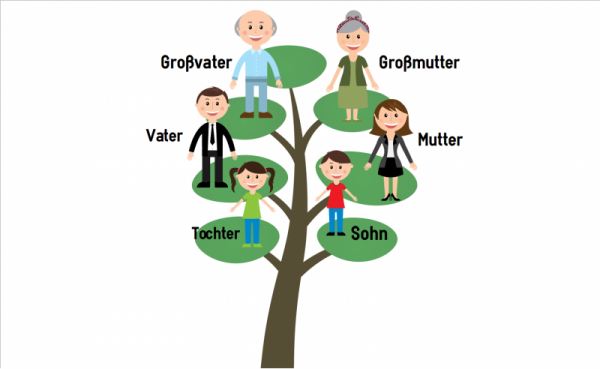
Miembros de Familia:
English-German
Parents and children
| the family | die Familie |
| the father | der Vater |
| the mother | die Mutter |
| the child | das Kind |
| the children | die Kinder |
| the siblings | die Geschwister |
| the sister | die Schwester |
| the brother | der Bruder |
| the son | der Sohn |
| the daughter | die Tochter |
| the wife | die Ehefrau |
| the husband | der Ehemann |
| the half-brother | der Halbbruder |
| the half-sister | die Halbschwester |
Grandparents and grandchildren
| the grandparents | die Großeltern |
| the grandmother | die Großmutter |
| the grandfather | der Großvater |
| the grandchildren | die Enkelkinder |
| the granddaughter | die Enkelin |
| the grandson | der Enkel |
Uncles, aunts, cousins and nephews
| the uncle | der Onkel |
| the aunt | die Tante |
| the cousin (male) | der Cousin |
| the cousin (female) | die Cousine |
| the nephew | der Neffe |
| the niece | die Nichte |
Stepfamily
| the stepfather | der Stiefvater |
| the stepmother | die Stiefmutter |
| the stepson | der Stiefsohn |
| the stepdaughter | die Stieftochter |
| the stepbrother | die Stiefbruder |
| the stepsister | die Stiefschwester |
Family in-law
| the parents-in-law | die Schwiegereltern |
| the father-in-law | der Schwiegervater |
| the mother-in-law | die Schwiegermutter |
| the brother-in-law | der Schwager |
| the sister-in-law | die Schwägerin |
| the son-in-law | der Schwiegersohn |
| the daughter-in-law | die Schwiegertochter |
Relationship-status
| single | ledig |
| married | verheiratet |
| divorced | geschieden |
| widow | verwitmet |
| separated | getrennt |
Examples:
| I have a half-sister | Ich habe eine Halbschwester | |||||||||||||||||||||||||||||||
| My father's name is Otto | Mein Vater heißt Otto | |||||||||||||||||||||||||||||||
| My mother is 50 years old | Meine Mutter ist 50 Jahre alt | |||||||||||||||||||||||||||||||
| She is my wife | Sie ist meine Ehefrau | |||||||||||||||||||||||||||||||
| He is my husband | Er ist mein Ehemann | |||||||||||||||||||||||||||||||
| I am married | Ich bin verheiratet | |||||||||||||||||||||||||||||||
| I am single | Ich bin ledig | |||||||||||||||||||||||||||||||
| My parents are divorced | Meine Eltern sind geschieden |
1. Translate into German!
1) the husband = der
2) the child = das
3) the grandmother = die
4) the grandson = der
5) the uncle = der
6) the niece = die
7) the stepfather = der
8) the brother-in-law = der
9) single =
10) separated =
2) the child = das
3) the grandmother = die
4) the grandson = der
5) the uncle = der
6) the niece = die
7) the stepfather = der
8) the brother-in-law = der
9) single =
10) separated =
2.
Translate into German!
1) Do you have siblings? = du ?
2) I have a brother = Ich einen
3) I have a half-sister = habe eine
4) My father's name is Otto = Mein heißt Otto
5) My mother is 50 years old = Meine ist 50 (fünfzig)
alt
6) She is my wife = Sie meine
7) I am married = bin
8) My parents are divorced = Meine sind
9) He is my husband = ist mein
10) I am single = Ich bin
2) I have a brother = Ich einen
3) I have a half-sister = habe eine
4) My father's name is Otto = Mein heißt Otto
5) My mother is 50 years old = Meine ist 50 (fünfzig)
alt
6) She is my wife = Sie meine
7) I am married = bin
8) My parents are divorced = Meine sind
9) He is my husband = ist mein
10) I am single = Ich bin

No comments:
Post a Comment